|
Even if you’re not inclined toward budgeting, circumstances sometimes force you to do so. This happens to my characters in several of my novels. In Song of Sugar Sands, Acadia’s parents were well blessed financially, so when she falls in love with a preacher-to-be, her spending habits don’t quite match their bank account. The cover I chose for this novel pictures an engagement photo of my daughter and son-in-law. My daughter is the first to say it's not my most professional cover. But it might be my favorite. My daughter was not the best at budgeting her Christmas and birthday money when she was growing up, so she has surprised me by being very good at budgeting her family finances as an adult. Song of Sugar Sands http://www.debracolemanjeter.com/song-of-sugar-sands.html Some of my readers may know I have a background as a CPA, which included auditing and advisory services. One of the aspects of the role involved pointing out to businesses the ways they might improve their cash flow, as well as their long-term profits. I also taught managerial accounting a few times and occasionally addressed the topic of budgets. In honesty, I never felt I was on solid ground talking about budgets. They seemed too intuitive perhaps. Try to maximize inflows and minimize outflows, but sometimes you need to increase spending in order to increase income more. I guess I always felt my students already knew this, and I had little new to offer. Besides, I never consciously budgeted my own finances, making me a poor role model. Now, looking back, I wonder if I might have done a few things right. Perhaps I have something worth sharing after all. My parents grew up during the Great Depression, and neither of their families had a lot of money to spend. This influenced their habits when they married, when I was growing up, and to this day. “I understand why my parents are the way they are about money,” I sometimes say, “but why am I the same way?” I don’t see these habits in my kids, so why do they persist in me? Is this often true of my generation? I once heard my preacher ask the congregation, “Do you spend more on a meal in a restaurant than you put in the contribution plate?” What? That seemed ridiculous to me. I’d never spend more on a meal than I contributed in church, not because I contribute so much as because I spend so little in a restaurant. Budgeting boils down to outflows and inflows, maximizing the one and not the other. If this were as intuitive as I always thought, why do so many couples have money troubles? Part of this, of course, springs from the uncertainty of career choices, job security, the advent of AI in our lives. Also, when things are going well financially, it may be a mistake to assume they always will be. So, over the long haul, are there ways to increase the probability that we can ride out the bumps without too much stress? I’m not sure. I’ve been blessed in many ways, and all good things come from God. I can’t take credit for much. But I thought I’d share what I’ve done and what I’ve learned. When my kids were growing up, they occasionally complained, “Why can’t I order a coke?” Our policy back then in restaurants was, “Just water, thanks.” “Would you rather not eat out at all?” I might ask my kids. This policy has stuck with me, though I see the rest of my family deviating from it. I’m usually content with water, though, and perhaps they would not be. We always chose birthday and Christmas gifts for the kids conservatively. Did they complain when they saw friends with three times as many dolls, toys, etc.? Sometimes, but really not that often. Were those kids happier than ours? I don’t think so. We had a babysitter at one point when my daughter was very small. The babysitter had two daughters of her own. If she took the three of them to the grocery, she would buy all three a toy. “Where did you get that?” I asked my daughter. She told me. “Don’t expect that to happen when we go to the grocery,” I said. She raised her eyebrows a fraction, but then she nodded. She did not bring it up again, so far as I can remember. When I scan a menu, I cannot help looking at prices. A like-minded friend once told me, “I look for the cheapest thing on the menu, but you look for the best at the cheapest price.” This has been my pattern. I cannot ignore those prices, but I’m also very particular about enjoying my food. I don’t want to be disappointed by my choice. I’ve discovered that I often enjoy the side dishes more than the main entrée. I can be happy without meat if I love the accompaniments. An older friend of mine, a woman who took over the family business when her husband died, used to suggest, “Why don’t we split the burger?” I discovered that half a nice juicy burger in a good restaurant was all the burger I needed. “Okay,” I’d say. “But I’m going to add a cup of soup.” I’m a lousy cook, so I like to eat in restaurants often and preferably not fast-food chains. My attitude toward dining out is similar to my attitude toward travel. I’d rather be able to do both more frequently while spending less rather than spending more but less often. As a business student, I studied utility theory in economics. These days my husband and I play word games like Wordle, Sequence, and Quordle. They occasionally use the word “utile.” “That’s not a word,” my husband says every time. He has a great mind for most trivia but makes an exception for the terms I introduce from accounting, economics, or academic research. “Endogeneity is not a word,” he loves to say. Utiles are units of utility, and in economic theory they measure how much overall satisfaction, not just monetary reward, is derived from an action. Perhaps everyone makes the choices that maximize theirs. For instance, one person might prefer to take an expensive vacation once in 3 or 5 years, while someone like me prefers a more budget-oriented vacation every year—or, after retirement, more than once a year. As an auditor, I learned to scan for the big-ticket items and do a more cursory examination of the smaller ones. Of course, small recurring expenditures add up over time. For example, one of my extravagances is sparkling water. Being advised by my doctor to drink six to eight glasses of water a day, I realized I didn’t love the taste of that much tap water. I switched to sparkling despite the cost. I rarely order it in a restaurant, but I stock up at home. Because small, recurring savings also add up over time, I shop for discounts. Publix often runs buy one, get one, or buy two, get one deals, and I opt for 12-can packs over 8 when I can. Occasionally I find a 15-can pack of LaCroix for the same price as a 12-can pack. When I consider a relatively large expenditure and I need to hire someone with expertise—staining a wood house or deck, taking down trees that threaten the house, converting a deck into a sunroom, adding an extension to a house, for example—I seek multiple estimates before making the choice. Again, I look for price and quality, so I don’t necessarily go with the lowest price. Nor do I assume that the highest price necessarily reflects the highest quality. I figure it’s worth the time to seek references. Time brings up another aspect of wealth management. For many of us, especially after retirement, it’s tricky to put a dollar value on an hour of time. But we know time is valuable. Like utiles, it’s not just about the money. There are other ways to spend a given hour. I’ve been known to kick myself, metaphorically, after wasting half a day comparing hotel prices and reviews or airfare for a relatively inexpensive trip. On the flip side, I’ve felt good on many occasions after stumbling upon a great deal for either. Sometimes I’ve found the best deal by booking far in advance, while other stays drop drastically nearer the actual date. We often go to Gatlinburg or Pigeon Forge for our anniversary in mid-December. There are so many hotels to choose among—and this is typically a slow week—I’ve found the best deals by waiting until nearly the last minute. Enough about expenditures. What about inflows? When I was looking at graduate programs for myself or undergraduate programs for my kids, I applied for every grant, scholarship, or fellowship I could find in our chosen fields. A few days ago, my daughter told me, “Ali said his alma mater’s tuition is now nearly $100,000 a year, and Vanderbilt’s is about the same.” We are not talking small potatoes here, at least not for most of us. I have a distant cousin in the entertainment industry. He advised my son and daughter-in-law, “I get up every morning and scan the dailies for any roles that I might fit. As soon as one is in the works, I start reaching out about it.” I’ve noticed how often I see this cousin show up in roles on tv shows I watch. At Christmas, I noticed their Los Angeles address had changed after many years, and I know LA prices are not coming down. I think his approach has worked well for him over the years. I came into the accounting world at a time when there was only one other female in most of my classes and only one other professional female at my CPA firm when I started. I learned to speak up for myself when I saw her being passed over for promotions and important clients. “Some of our clients wouldn’t want a woman in charge,” the managing partner told me. “How do you know? Have you asked them?” I asked. “I just know how they think.” This was hard to rebut. Still, addressing the issue head-on paid dividends down the road. “I think you would have made partner,” he told me when I eventually left the firm. One year around Christmastime, the managing partner left a copy of Dress for Success on all our desks. Great Christmas gift, we fumed. One idea from the book stuck with me. Go to a store you can’t afford to get ideas. Then, go to the store you can afford with a picture in your mind of what you’re looking for. Time passed before I earned my doctorate and went to work for Vanderbilt, but many things had not changed. Women were rarely tenured in the business school and even more rarely promoted internally from associate professor to full. “Why?” I asked time and again. “Why wasn’t Robin tenured?” Later, “Why am I not ready for promotion?” As a Christian, humility is applauded, and I know this to be true. How I love to see a great basketball player giving credit to God and his teammates. “Don’t take the best seat yourself,” Jesus said. “Wait for someone to offer it to you.” How do we reconcile this approach with the workplace? I don’t know, but I don’t think Jesus wants any of us to be mistreated because of our gender, our race, our background. He warns us that persecution may happen because of our faith, and this is to be rewarded by God. I believe this to be different from workplace discrimination and that we should, and must, stand up for ourselves in the face of the latter. Even though I’ve learned this, I’ve also learned I’m not as good at negotiation as some people are. I remember when my mother, for instance, would negotiate in a dress shop. Even if a dress was already on sale, perhaps marked down 50% or even 75%, she might say, “I’ll give you $20.” We would turn to leave. More often than not, the shop owner would chase after us. I was humiliated but also exhilarated. Still, I never learned to do that. Also, if your spouse or partner has poor money management skills, you may feel awkward taking the reins from time to time. Nonetheless, when your finances are low and your financial future shaky, this probably makes more sense than avoiding the topic, taking out loans or credit cards you can’t afford, or simply letting matters slide. Standing up to one’s spouse may be harder than hoping for circumstances to change, but sometimes it’s the wiser choice. My final thoughts on careers and jobs: don’t be afraid to take risks, but do think them through. And persevere. One of my colleagues at Vanderbilt, Germain Boer, always signed his emails, “Never, never give up.” 
0 Comments
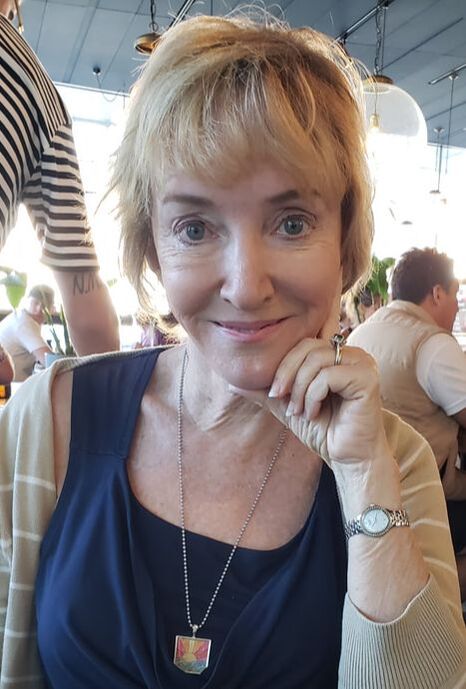
Remember those old movies where the actress would be riding in a convertible wearing a scarf? One image that springs to my mind comes from the ending of an old Pat Boone movie, State Fair. I thought of this today as I tied a teal scarf around my hair for a boat ride, trying to feel as glamorous as those actresses always looked in the old movies. Feeling glamorous doesn’t come easily. As a woman, don’t we all have at least one or two features we’d like to change? That is, if we’re lucky. For some of us, it’s many more. One feature I’ve always been self-conscious about is having a high forehead. So I cover it with bangs. In a boat, my hair will blow straight back and my bangs disappear or spring out at erratic angles if I don’t wear a scarf. When I was in college, I remember doing some shows in Readers’ Theatre. One director suggested, “Why don’t you try your hair a different way? Without the bangs?” My boyfriend, now my husband, liked the bangs and, I suspected, did not like my high forehead. I ignored the direction’s suggestion. So, here I am, many years later, still wearing bangs and a scarf when I’m in a boat. Of course, I know that high foreheads aren’t really a curse. What matters is what’s on the inside. I remember telling my niece this once when she was a teenager. “What?” She looked at me as if I’d suddenly sprouted horns. “Nobody cares what’s on the inside. They can’t see that.” Back to my recollections of State Fair and the impact it had on me. As I haven’t seen the film in many years, my memory of the characters, the plot, and even my reaction may be colored by the passage of time. Still, I want to tell you how I remember it. An interesting thing about memory is that the accuracy of our memories and our perceptions often matters less than how they affect us and our lives. The movie was generally a wholesome family film about a family’s adventures during the state fair, including the usual pie competitions, carnival rides and games, and so on. The son, played by Pat Boone, falls in love with an exotic dancer, a sweet young woman with a checkered past, played by Ann-Margret. In the beginning of the movie, as I recall, we see a former girlfriend of his, but only a brief glimpse. As the plot advances, someone convinces the dancer that she’s bad for him, so she breaks up with him—and seemingly breaks his heart as well as her own. The final scene pictures a happy Pat Boone a few days later in a convertible with a smiling girl wearing a scarf, to my astonishment. Who is she, I wanted to know. Perhaps, despite all the signals to the contrary, he resumed his relationship with Ann-Margret. Or … was it possible that he’d gotten over his great love so quickly and moved back to his old girlfriend? Or moved on? Most likely, I had no way to pause and replay the image at the time to make out the girl’s features. Instead I replayed it many times in my mind. What was he thinking? Wasn’t she his true love? (Besides, she was Ann-Margret, after all). Are men so fickle that, as soon as one woman’s out of sight, he only has eyes for the next one? Surely men aren’t so shallow as that. At least not all men. But what do I know? I’m only a woman. I wanted to argue with the filmmakers, as far removed from life in Mayfield, Kentucky, as if they lived on Mars. Now that my son is a Hollywood film director, maybe I’ll get my chance from time to time. Even if I am a woman. Perhaps I’ll grow out my bangs. Oh, I don’t know. I’m comfortable with my old things, and my bangs and I have been together a long time. My first novel, The Ticket, is now available on audio, as well as paperback, Kindle, etc. Do let me know if you happen to write the 200th review for The Ticket, and I’ll send you a free autographed copy of one of my novels. They say 100 is an important milestone, so I’m thinking 200 might be even better, and I’m getting close. Trailer for The Ticket: https://vimeo.com/50187275 https://www.amazon.com/Ticket-Debra-Coleman-Jeter-ebook/dp/B0BZB6F11J Now available on audio: Chirp--Play sample or buy audiobook: https://share.google/rkHtlmqM6hLCB9BVD Googleplay: https://play.google.com/store/audiobooks/details/The_Ticket_Wealth_Comes_at_a_Cost?id=AQAAAED61g6W5M&hl=en_US&pli=1 To be clear, the photo is not from an old movie; it's my daughter and I.  |





Categories |

 RSS Feed